About This Blog

This is, as the title indicates, my kitchen notebook (the header is actually a scanned image of the cover of a notebook that I started using about 25 years ago and the background is a stained page from that book). I am not a professional recipe writer. If you try any recipe here, please keep that in mind, these recipes have not been tested by an independent tester. The "recipes" are often not even really recipes but rather a list of ingredients that I've noted after preparing a dish on the fly that I thought came out well. Perhaps I've also added some instructions, but I rarely keep accurate track of what I've done in terms of time or temperature, I've just noted to the best of my memory (feeble) what I did.

Please feel free to take some inspiration from here, but on the other hand, please give credit where it is due. I also welcome any constructive comments that you might have if you are inspired to try a recipe. Questions are welcome, but keep in mind that I may not remember specifics. The dishes do evolve over time...

Thank you and enjoy!
Showing posts with label Chiles. Show all posts

Green Chile Pudding Soufflés


I used a recipe for sweet corn pudding soufflés as a template for this preparation. This was a great way to use up a package of the frozen roasted Sonora Anaheim chile peppers from my garden. One thing that is really convenient about pudding souffles as opposed to regular poofy souffles is that most of the preparation can be done in advance. The pudding soufflés are baked twice, the first baking can be done hours in advance of serving them. For the final bake the puddings are removed from the ramekins that they were baked in, placed on a baking sheet or oven proof serving dish, then baked with some cream until they are warm and puffy. These make a great first course or a vegetarian main dish. We enjoyed them as a main dish accompanied by a green salad.

About 14 oz. roasted peeled seeded green Anaheim peppers, chopped
2 cups whole milk
6 tablespoons butter
6 tablespoons Oaxacan Green cornmeal, or use 4 tablespoons all purpose flour
1 teaspoon Oregano Indio, or dried oregano
1/2 teaspoon ground cumin
1 teaspoon salt
4 eggs, separated
2 1/2 ounces Mount Toro Tomme, finely grated, an aged dry Jack would be a good substitute
1/2 cup heavy cream or Crème fraiche
Smoked paprika

Blend half of the peppers with half of the milk in a blender or with a wand blender to make a smooth puree. Blend in the rest of the milk.

Melt 3 tablespoons of the butter in a large saucepan, add the cornmeal and stir to mix, Allow to cook gently for a few minutes until the cornmeal becomes fragrant. Whisk in the pepper mixture until blended and smooth. Bring to a simmer. Allow the mixture to cook gently, stirring frequently, about 20 minutes, until thickened. Season with the oregano, cumin, and salt.

Remove from the heat and stir in the remaining butter. Stir in the egg yolks one at a time. Stir in the cheese and stir until the cheese has melted. Stir in the remaining chopped peppers. Transfer to a large bowl and allow the soufflé base to cool a bit.

Preheat the oven to 400°F. Butter 7 or 8 ramekins, be sure to get the rims, and place them in a baking dish.

Beat the egg whites until they form soft peaks and gently fold them into the soufflé base. Ladle the mixture into the ramekins, filling them to the rims. Pour in enough hot water to come halfway up the sides of the ramekins. Place the dish with the ramekins in the oven. The little soufflés should take about 30 minutes to cook, but check after 20 minutes in case there are hotspots in your oven. When done, the soufflés should be puffed up and brown on top. Immediately remove them from the oven, take them out of the water bath, and allow them to cool. The soufflés will fall. They can be made up to this point several hours in advance of serving.

Ten minutes before the soufflés are to be served, turn them out of the ramekins and place them, right side up, in individual gratin dishes that have been smeared with a spoonful of crème fraiche or use one large baking dish. Top each soufflé with another spoonful of crème fraiche. Put the baking dishes in the oven for about 8 minutes, or until the cream is bubbling slightly and the soufflés have swelled up. Remove the soufflés from the oven. If they've been baked on one large dish place each one on a warm serving plate and pour the cream from the baking dish over the soufflés. Shake some smoked paprika over all and serve immediately. 

Note: The soufflés were looking close to finished at 20 minutes but were still quite jiggly. They continued to puff up over the next 10 minutes. At 30 minutes they were still somewhat jiggly but quite brown on top. Perhaps I'll cover them with a sheet of aluminum foil for the last 10 minutes the next time I try the recipe, either that or reduce the oven temperature to 375ºF. They seemed to be baked enough though and once cooled they came out of the ramekins fairly easily, I scooped out the little bit of souffle that stuck to the bottom and placed in the gratin dish and plopped the souffle on top.  It came out great.

20 minutes
25 minutes
30 minutes

The corn soufflé recipe called for 6 ramekins of an unspecified size. I guess my ramekins were too small, I had to enlist a 7th one of a different shape and still had a spoonful of mixture left. My ramekins hold 7 ounces when filled to the rim, that other one holds a bit more and it has a rim with an outward curving lip which made for a different shaped top. I like the effect with the straight rim. Next time I'll probably make eight slightly smaller souffles with the straight sided ramekins.

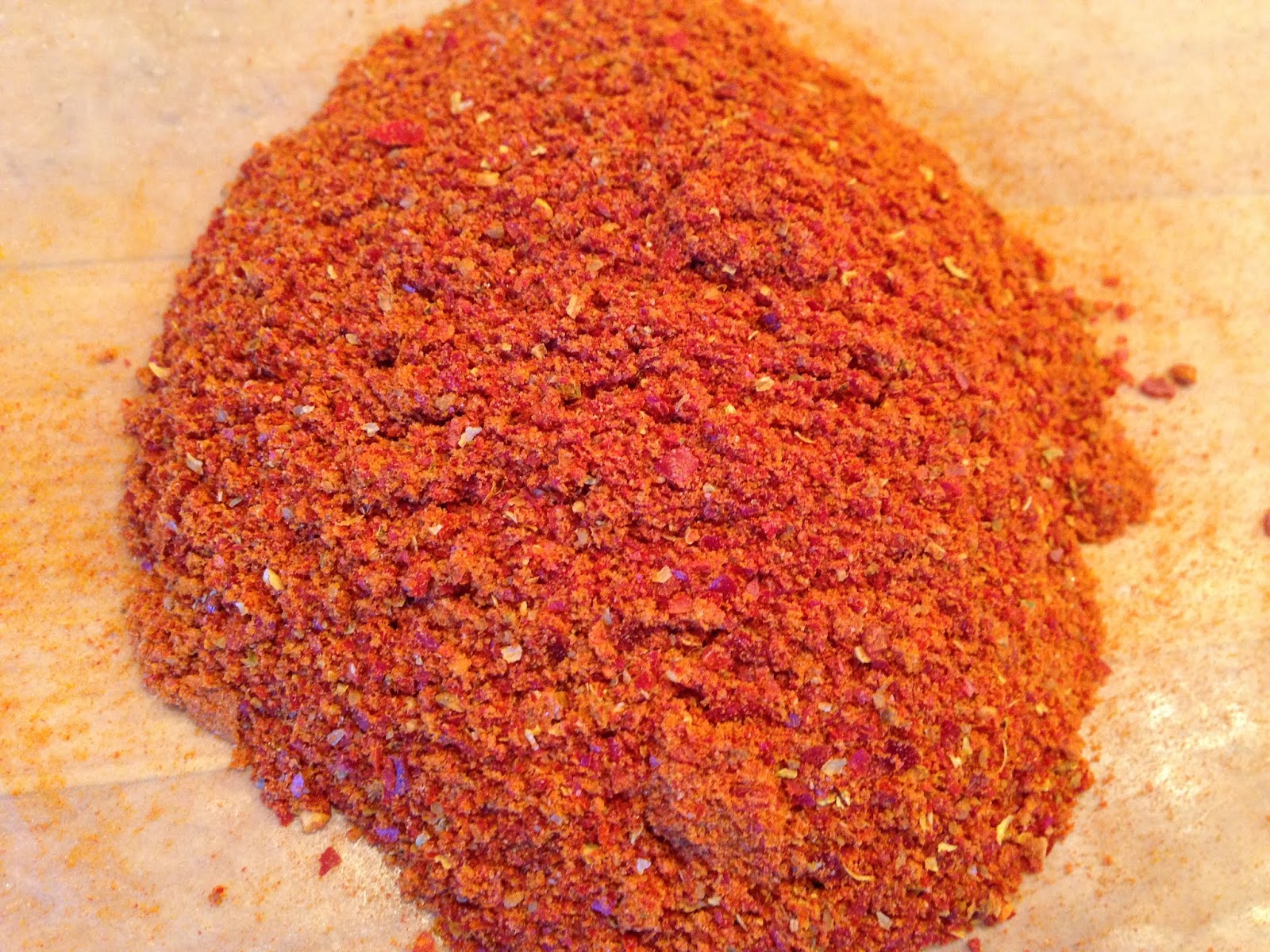
Faux Merkén

Dave and I were in Chile earlier this year hiking in Torres del Paine National Park. Every evening, whether we were dining in the dining room at the EcoCamp or dining in one of the refugios along The Circuit, there was a bowl of Merkén (or Merquén) to be found on the table. Merkén is a chile pepper blend made by the indigenous Maupche tribe for ages but which has recently become a popular seasoning enjoyed throughout Chile. I found myself requesting it every morning to spice up the bland scrambled eggs that we were served to fuel us for the day's hike. Scrambled eggs are not one of my favorite things, but with a dash of Merkén and a slice of cheese on top of the usually blah toast, breakfast became something more than just fuel for the trail.

Unfortunately we spent all of our time in Chile in the park so there wasn't an opportunity to shop and stock up on a stash of Merkén to take home. When I got home I did a bit of research, which started with trying to figure out what the name of the spice blend is. That took a bit of rooting around on the web but I finally found what I was looking for. Merkén is made in two basic formulations, natural - which is just ground chiles and salt, or especial - which is ground chiles with salt and coriander seeds and sometimes cumin and oregano, and sometimes other ingredients like bay and garlic.

What really makes Merkén unique is the chile peppers and how they are prepared. Aji Cacho de Cabra (Goat Horn Peppers) are the peppers grown by the Mapuche. The peppers are harvested green, allowed to ripen, then sundried, and then finally smoked over a wood fire. I wanted to make my own version of Merkén, it would certainly not be authentic, but I craved that same lovely flavor of sweet spicy salty peppers and sweet and earthy spices. The Wikipedia article on Merkén says that the typical ratios for the especial mix are 70% peppers, 20% salt, and 10% coriander seed. And then I recently found a couple of Merkén recipes in Maricel Presilla's book Gran Cocina Latina, where she recommends using dried New Mexico chiles. I have loads of dried New Mexico chiles that I dried from my grand chile growing experiment last year. Maricel recommends using hot Spanish pimentón to lend spice and smoke to the blend, but I decided to us smoked sea salt instead. And to get the spice into the mix I used a mix of dried mild New Mexico chiles and dried Aleppo peppers (also from my garden). The result is fabulous.

I used very small quantities for my experimental batch, but I'm actually thinking that small is the way to go because the mix will lose it aroma quite quickly if it sits around - fresh is best. I also used my digitial scale which allows metric measurements, grams are so much more precise when working with small quantities.


Faux Merkén

17 g. dried seeded Zia Pueblo peppers (or any mild New Mexico type pepper)
4 g. dried seedless Aleppo peppers (or dried cayenne peppers)
6 g. smoked sea salt (Salish is good)
3 g. dried green coriander seeds

If the peppers are leathery they need to be crisped to grind properly, I placed mine on a baking sheet and put them in a 350º degree oven and then turned the heat off and let the peppers sit in the oven a few minutes, then removed them from the oven and let them cool on the baking sheet. They can also be toasted in a skillet or on a flat griddle, press the peppers onto the hot surface with a metal spatula until they are dry and slightly charred. I find it easy to burn the peppers with the griddle method so I dry mine in the oven.

Grind the salt and coriander seed together in a spice mill (coffee grinder) until fairly finely textured. Crumble the peppers into the mill and grind the mixture to whatever consistency you desire. I like it to be between fine and coarse, with pepper flakes and pieces of coriander still visible.

The mix is great on eggs, or used as a spice rub, sprinkled on vegetables, meat, fish, poultry, tossed with roasted nuts, or sprinkled on cheese. Hmm, it might even be good on a nice cold slice of melon. Cucumbers, tomatoes, and Merkén. A dash of Merkén on hummus. Merkén and chocolate? What might it not be good on?


Thanksgiving 2011 Turkey Enchiladas

It is part of the annual post-Thanksgiving feast ritual - Turkey Enchiladas - and they are never the same twice, nor are they ever "authentic", I'm not an expert on Mexican or TexMex cuisine. This year they came out great so I'm going to try to remember what I put into them, other than Turkey.

The Sauce (makes more than what you need for one batch of enchiladas, enough for a double batch):
3 fresh roasted Big Jim chiles (could have used more, they weren't as spicy as I thought)
1/4 of a huge sweet yellow onion, cut in slivers with the root end attached, seared in a dry skillet
2 cups of roasted tomatillos from my stash in the freezer, thawed
a handful (1/4 cup?) of roasted salted pepitas
Turkey broth, about 1 cup
a big dab of bacon fat, but olive oil would be just as good
ground cumin, at least a teaspoon, perhaps more
a large pinch of dried wild oregano, crushed

Whirl the chiles, onion (root end removed), tomatillos, and pepitas in a blender (love my VitaMix!) to make a puree, don't over mix. Heat the bacon fat in a skillet (medium heat?), add the cumin and let it sizzle a bit, pour in the chile-onion-tomatillo puree and stir to mix. Rinse out the blender jar with some of the turkey broth and pour it into the skillet, add more turkey broth - total of about 1 cup of broth. Add the dried oregano to the sauce and simmer the sauce until it thickens. Set aside.

The Filling:
Olive oil as needed
2 fresh Big Jim chiles (not roasted), seeded and cut into slivers
another 1/4 of that huge sweet yellow onion, cut into slivers
salt and pepper to taste
about 2 to 3 cups of chopped roasted turkey, light and dark meat (a cereal bowl full, the cream and green ones, sorry, a personal reminder that's useless to anyone else)

Heat some olive oil in a saute pan over medium-high heat, add the chiles and onions, sprinkle with some salt and stir, cooking for a minute or so. Turn the heat down to medium-low, cover the pan, and let the vegetables sweat, stirring every once in a while. Continue to cook the vegetables, covered, stirring occasionally, until they are softened and starting to brown. Turn the heat off, add the turkey and season with fresh ground black pepper, stir together and set aside.

To assemble the enchiladas:
Turkey broth, about 1 cup
2 tablespoons of the sauce
8 corn tortillas (6-inches)
chopped fresh cilantro, a couple of tablespoons or so, to your taste
Taleggio cheese, or another soft melting cheese of your choice, fontina or jack cheese is good

Heat the turkey broth and 2 tablespoons of the sauce in a very small skillet over low heat. Smear a few tablespoons of the sauce into the bottom of a baking dish, my old 6x10x1.75 inch pyrex baking dish is the perfect size. Working with one tortilla at a time, submerge the tortilla into the broth, turning it a few times, I found that 6 turns was about right, the broth shouldn't be so hot that you can't carefully dip the tortillas with your fingers. Lay the softened tortilla, on a work surface or plate, place a few tablespoons of the filling across the center of the tortilla, and roll it up into a cylinder and place it in the baking dish, seam side down. Continue with the rest of the tortillas and filling until the pan is full. Any leftover filling can be scattered over the top.

Add about a cup of the sauce to the skillet with whatever broth remains in it and simmer until it thickens to a consistency that you like. Stir in the chopped cilantro. Pour the warm sauce evenly over the enchiladas, top with grated cheese, about 1/2 to 3/4 of a cup, or to your liking. Bake in a 350°F preheated oven until bubbling around the edges and just starting to brown on top, about 1/2 hour with convection. I held it in the oven for another 15 minutes at 200°F with the convection off.

Serves 3 or 4.

Slow Toasted Aji Angelo Peppers

Preheat the oven to 200F.

Cut the caps off the peppers and cut the peppers in half lengthwise. Remove the core and seeds. Put all the pepper halves in a cazuela, it can be filled about half full. Roast with the convection fan on, stirring every half hour, until the peppers are dry and crisp, about 3 hours.

Cool and store in an air tight container.

Crush to make pepper flakes or grind into paprika. Mildly spicy.

Pepper Jam

5 ½ cups chopped peppers, with or without seeds (about 2 lb)
1 box low sugar pectin (Sure-Jell)
3 ½ cups sugar
½ cup lemon juice
½ cup 5% acidity vinegar (apple cider is good)
½ cup water

Mix pectin with ½ cup of sugar. Put fruit and liquids in blender and blend until liquid or leave chunky if desired. Cook fruit until boiling. Mix in pectin mixture and return to a rolling boil. Add sugar until all mixed in and bring to a rolling boil and boil for one minute. Remove from heat. Ladle into clean jars and top with boiled lids and rings. Process for 10 minutes in boiling water bath.

Makes about 6 cups jam.

Aji Amarillo Jam


Modification to use Pomona's Universal Pectin

1 generous pound of peppers, about 3 cups chopped
1/4 cup lemon juice, Meyer is good
1/4 cup apple cider vinegar
1/4 cup water 3 teaspoons calcium water as prepared per instructions in the box
1 3/4 cups sugar
1 1/2 teaspoons pectin Pomona's pectin powder

Remove the stems from the peppers but don't core and seed them. Chop the peppers in a food processor, a medium fine texture is what I prefer. Combine the chopped peppers, lemon juice, vinegar, and water in a large saucepan and bring to a boil, turn down the heat and simmer covered for 5 minutes. Stir in the calcium water.

Combine the pectin powder with 1/2 cup of the sugar. Bring the pepper mixture to a boil and stir in the sugar/pectin mixture. Stir well to combine and cook for 1 to 2 minutes to dissolve the pectin. Stir in the remaining sugar and bring back to a boil. Remove from the heat.

Fill jam jars to withing 1/2 inch of the rims. Cap the jars according to the manufacturer's instructions and process in a boiling water batch for 5 minutes.

Made 7 4-ounce jars of jam.

Shallot Marinated Buffalo Steak

2 thin cut buffalo (bison) New York strip steaks, about 12 ounces
2 walnut sized shallots, peeled
2 tablespoons extra virgin olive oil
1 teaspoon asian fish sauce
1/4 teaspoon ground aleppo pepper or cayenne
1/2 teaspoon dried Italian oregano
salt and pepper to taste


Trim excess fat from the steaks. Lightly pound the steaks to about 1/3-inch thick.

Grate the shallots on the medium holes of a box grater. Combine the grated shallots, olive oil, fish sauce, aleppo pepper, oregano, salt and fresh ground pepper. Spread the mixture on both sides of the steaks and leave at room temperature for 30 minutes.

Heat a ridged grill pan over medium heat and grill the steaks until medium rare.

Tomato Risotto With Goat Cheese

8 ounces Paul Robeson tomatoes
2 Szentesi Semi-hot peppers, charred, peeled and seeded (about 1.5 ounces cleaned)

4 ounces chopped onion
1 tablespoon olive oil
1.5 ounces diced pancetta (from Boccalone)
1 cup risotto rice (Vialone Nano)
1/3 cup dry white wine (Sauvignon Blanc)
About 2 cups broth (I had duck broth in the freezer), hot
2 ounces boucheron goat cheese without the skin
20 cherry tomatoes, cut in half

Char the tomatoes lightly over an open flame, remove the peels and stems, don't worry about removing all the charred bits of skin. Puree the tomatoes and cleaned peppers in a blender until there are still small bits of pepper visible, set aside.

Saute the pancetta in the olive oil over medium heat in a 2.5L pressure fry pan until the pancetta starts to brown. Add the onion and cook it until it softens. Add the rice and cook until it becomes opaque. Add the wine and cook until most of it is absorbed. Pour in the tomato-pepper puree - add one cup of the stock to the blender container to get the rest of the puree and add it to the pan. Put the lid on the pan, lock it in place and bring the cooker up to high pressure. Turn the heat down to maintain pressure and cook for 5 minutes. Bring the pressure down using a quick release method and uncover the pan. Continue to cook the risotto over low heat, using the rest of the hot broth as needed, until it is nearly done - about 3 to 5 minutes for al dente. Add the cherry tomatoes and crumble in the goat cheese and stir until it is blended in and finish cooking - about 2 more minutes.

Serves 2 generously.

Bean Salad With Czech Black Chile Dressing

I set about making a salad with the last of my Ojo de Cabra beans from Rancho Gordo. I put a couple of whole dried Czech Blacks into the bean cooking pot. The pot liquor didn't pick up much chile flavor though. But, I still didn't give up on them. The pods had softened but not split or fallen apart so I removed the stems, cut the pods open, removed the seeds, and then scraped the softened flesh from the skins. Then I pureed the flesh with some sherry vinegar and a clove of garlic from the pot of beans and incorporated that into a dressing with olive oil, ground cumin, and dried oregano. The salad consisted of the beans, some cut-up leftover roast chicken, sliced celery, thin sliced red onion, and cherry tomato halves. Wow, it was really tasty! The chiles added a very pleasant, subtle warmth. Still didn't have a distinctive chile flavor, but the warmth was just sooo perfect.

Spicy Cornmeal Sticks

2 to 4 jalapeno or similar chiles, to taste
1 cup cornmeal, preferably blue
1 cup all-purpose flour
2 tablespoons sugar
2 teaspoons baking powder
1/2 teaspoon salt
2/3 cup milk
6 tablespoons butter, melted (part rendered duck fat is yummy)
1 large egg
vegetable oil


Preheat oven to 425 F.

Roast the chiles over an open flame or under the broiler until blackened. Set aside to cool. Rub off the skins, remove the stems and seeds, and finely chop, set aside.

Mix the dry ingredients in a small bowl. Whisk the milk, butter, egg, and chiles together in a large bowl. Stir the dry ingredients into the liquid mixture until just combined. Scrape the batter into a pastry bag.

Brush 2 well seasoned cast iron cornstick pans with oil. Heat the pans in the oven until the oil smokes slightly, about 10 minutes. Pour off any excess oil. Pipe the batter into the molds. Alternatively, the batter can be spooned into the molds, but piping is much easier. Bake until puffed and golden brown, about 15 minutes.

Makes 14 cornsticks.